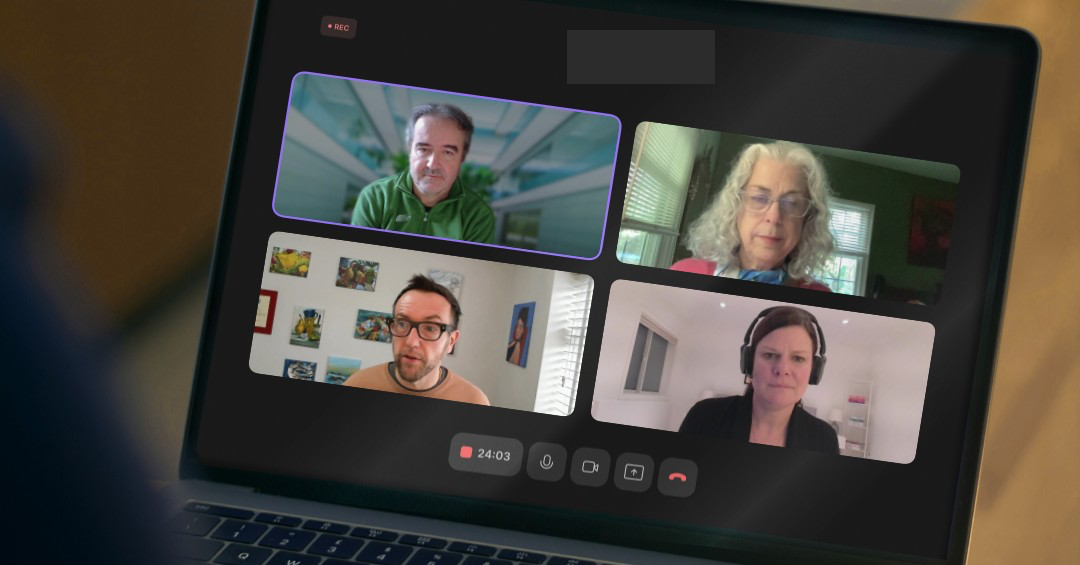
A laptop screen displays a video call with four people, each in their own window. The participants appear to be engaged in conversation, with various backgrounds behind them, including a green wall and some artwork.

AI’s Impact on Digital Accessibility Platforms

In our latest AXSChat, we spoke with Gina Bhawalkar from Forrester about their WAVE report on digital accessibility platforms. The discussion explored how organizations can use these tools to scale accessibility, the growing role of AI, and the importance of keeping human oversight at the center. Discover key insights on trends, challenges, and the future of accessibility in this detailed conversation.
A glowing "AI" symbol at the center of a futuristic digital network, with red and blue lines connecting data nodes in a high-tech, neon-lit environment.

Agentic AI is Here: How Atos is Leading the Next Automation Revolution

Agentic AI, introduced by Atos through the Polaris AI Platform, represents a transformative shift in business automation, moving from AI assistance to autonomy. This approach empowers systems to act independently, optimizing complex workflows. With pre-built agents addressing various tasks and a focus on collaborative Multi-Agent Systems, Agentic AI augments rather than replaces human roles, promoting efficiency and innovation.
planet earth

AI and other future technologies will be necessary — but not sufficient — for enacting the UN’s Pact for the Future

The UN’s Pact for the Future, adopted in September 2024, aims to address sustainability and justice for present and future generations, acknowledging AI's role while emphasizing human rights. However, it inadequately reflects current scientific realities regarding planetary boundaries and lacks effective monitoring mechanisms. Urgent funding and resource redistribution are essential for implementation.
A computer screen displays the LinkedIn homepage, showing the search bar at the top and profile images, articles, and updates on the main feed.

Why Old Posts Dominate Your LinkedIn Feed in 2025—and How to Win With the New Algorithm

In 2025, LinkedIn’s algorithm prioritizes old posts that emphasize quality and engagement over recency, reshaping users' feeds. Users should focus on meaningful content, leverage native formats, and encourage discussions to succeed. The algorithm's evolution aims to enhance professional interactions while maintaining a less news-oriented environment.
Four professionals in business attire collaborate around a table, interacting with holographic digital interfaces displaying data and icons, in a modern office setting with blue and orange lighting.

Harnessing AI and Tech Innovations: Atos Pioneers Future-Forward Solutions for Business and Society

Atos explored the transformative impact of Generative AI in business, emphasizing its ability to automate operations and drive innovation. The company also highlighted digital accessibility, the incremental nature of AI in workplaces, and collaborated on emergency response technology. Additionally, Atos showcased cloud transformation milestones and provided a strategic AI integration framework for businesses.
A futuristic server room with glowing blue lights, large digital displays, and multiple racks of servers. Two people stand near the servers, emphasizing the scale and advanced technology of the environment.

Siemens Expands Digital Horizons with Major Moves

Siemens is enhancing its digital landscape in Spain with a new data center hub in Madrid, creating local jobs and advancing AI in manufacturing through a partnership with NVIDIA. Siemens Energy received a strong investment grade from Moody's, while Siemens Healthineers pursues net-zero emissions, reflecting a commitment to sustainability and innovation.
A group of professionals and a humanoid robot collaborate around a computer in a modern, brightly lit office with digital screens and plants in the background.

AI Could Potentially Replace 300 Million Full-Time Jobs Globally

The AI landscape reveals significant challenges as companies increasingly replace human roles with AI, risking dependency on financially unstable providers. Automation could displace 300 million jobs globally, making workforce reskilling critical. To mitigate risks, businesses must adopt balanced strategies focusing on governance, integration, and proactive workforce planning to ensure resilience in AI adoption.
A flowchart showing the transition from "Inefficient e-CODEX System" to "Future-Proof Digital Systems" through four stages: User-Focused Design, Adaptable Architecture, Continuous Improvement.

Revitalizing Justice in the European Union.

In today's digital era, user-centric design is essential for effective systems. The e-CODEX initiative highlights the struggles of integrating diverse legal frameworks and ensuring usability. To prevent similar pitfalls, future systems must emphasize intuitive design, adaptability, and continuous improvements, leveraging emerging technologies while addressing evolving societal demands and cultural sensitivities.
A group of people sit in a circle talking, with a woman in glasses smiling at the center. They are indoors, and a European Union flag hangs in the background.

Understanding the European Accessibility Act’s Impact

In a recent AXSChat discussion, Susanna Laurin, Director of the Funka Foundation, highlighted the importance of accessibility and inclusion for people with disabilities. Emphasizing adherence to the European Accessibility Act, she outlined practical steps for organizations to implement standards and championed a holistic approach that integrates accessibility into design, education, and collaborative efforts.